Product-Led Growth: Going Deeper on How to Get Started
Where do you start with implementing product-led growth (PLG)? Go deeper on how to map your funnel with PLG in mind, how to set up tracking, and how to implement PLG in-app.


Today, customers increasingly expect to experience the value of a product before buying. And product companies are taking note.
According to ProductLed, most B2B SaaS companies have already adopted a product-led growth motion–a go-to-market (GTM) strategy in which the product is the primary catalyst behind growth–at least to a certain extent. And 91% of surveyed companies expected to increase their product-led growth (PLG) investments in 2022.
The key benefits of a PLG strategy make it appealing to both users and product teams:
- The democratization of the buying process
- A data-informed view of the end customer's goals
- Lower acquisition costs, and
- A streamlined buying cycle for the company
Marketers are crucial in PLG strategies, second only to product teams. Let's examine how marketers can collaborate with the product and GTM organization to design a valuable product-led funnel.
Key takeaways and Table of Contents
Key takeaways
- Product-led methodologies emphasize delivering value to users through the customer journey.
- The main components of a product-led campaign include a self-service motion, a free trial or freemium offer, and product and user data that support an empirical approach.
- Marketers have a key role to play at the awareness stage of the funnel.
Table of contents
What is product-led growth?
Product-led growth is a go-to-market (GTM) strategy in which the product is the primary catalyst behind growth, expansion, and retention. Companies with product-led motions empower users to get a taste of the actual value of their products via a free trial or freemium version before buying. As a GTM methodology, PLG contrasts with more traditional sales-led (SLG) models, where a prospect's first interaction with the product comes via a product demo or sales call.
Preparing for a PLG campaign
Priming your product and GTM teams for PLG it’s helpful to have a nuanced understanding of your customers and their problem space. Here's what you'll need to do to get started.
Conduct marketing analysis
In a product-led motion, the marketing team works with the product team to drive user activation and education.
The need for awareness building at the top of the funnel looks remarkably similar for both PLG and sales led growth (SLG) motions. Growth Advisor and Reforge Executive-in-Residence Hila Qu demonstrates how both funnels begin with a marketing acquisition channel before diverging at the signup stage:
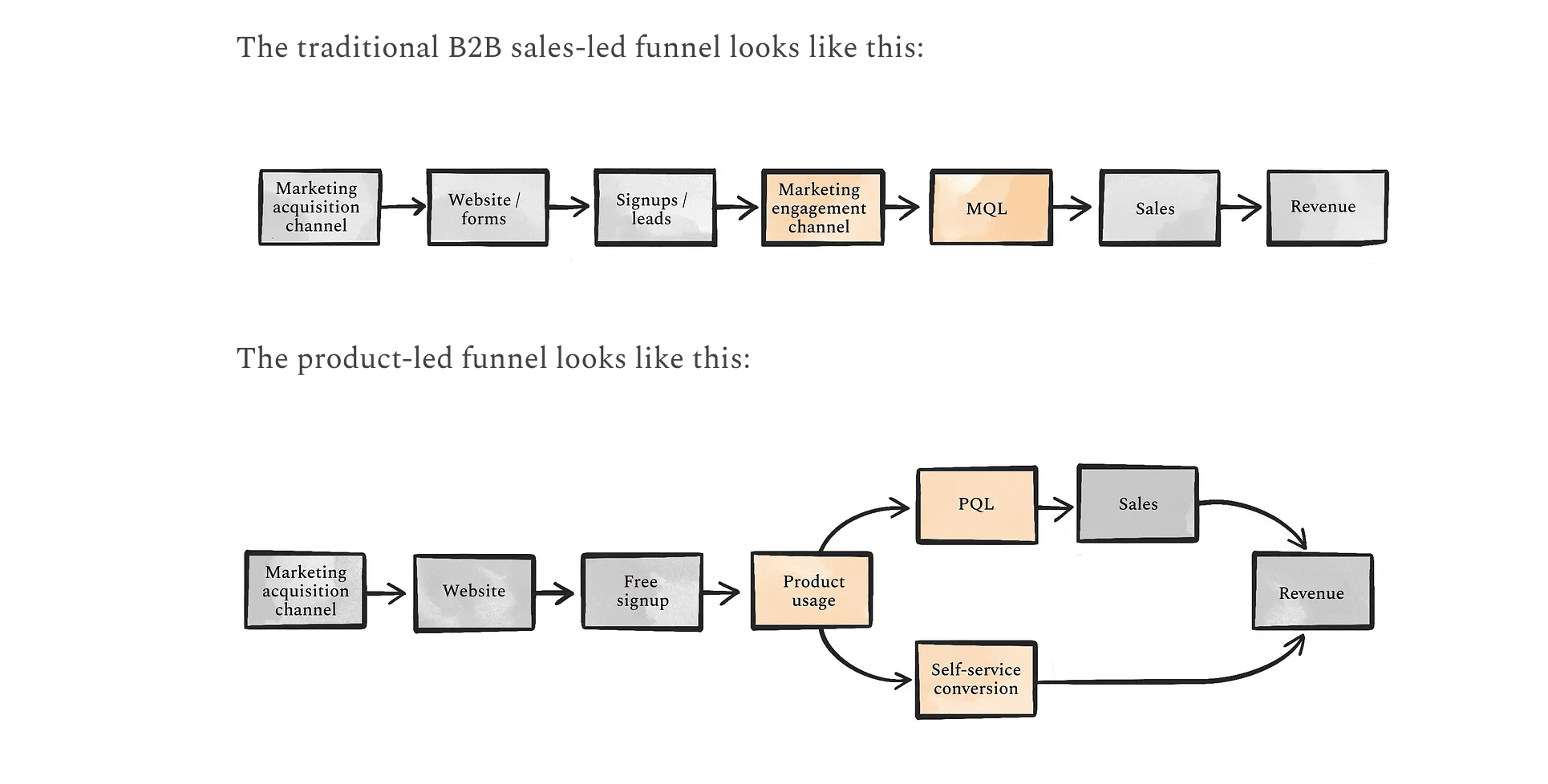
But because PLG implies leveraging the product to drive growth, product-led companies need an unparalleled understanding of their customers' needs.
What types of marketing analysis help teams prepare for a PLG campaign launch? While there are many to consider, two main focus areas should be competitive analysis and customer research.
Competitive analysis
Competitive analysis helps you understand who your competitors are, the products they offer, and how your solution stacks up against theirs.
If you're conducting competitive analysis, you'll want to do the following:
- Create a list of your direct and indirect competitors - Sites like G2 compile lists of the major players across different product categories and verticals. You can also use Google or marketing research tools like Ahrefs or Semrush to see who's creating content or bidding on keywords related to your core product.
- Compare product features - With your competitors list in hand. You can compare feature sets, pricing, and capabilities for yourself and your competitors. Product marketers can use tools like Crayon or Klue to create competitive battle cards as information repositories to enable content, sales, and product teams.
- Compare marketing and advertising strategies - Products in competitive areas will likely bid on strategic keywords and buy ad space on Google and social media platforms like LinkedIn to generate demand. It would help if you also considered how your competitors use owned channels, like blogs and earned media placements, to drive awareness and educate their audiences.
- Conduct a SWOT analysis - How does your product stack up in light of the above? With your competitive research in hand, you can use a SWOT (strengths, weaknesses, opportunities, threats) analysis to identify areas of improvement relative to your competition.
Customer research
Understanding your customers' pain points at a granular level is essential for building a winning product.
There are two main types of customer research: quantitative and qualitative.
- The quantitative analysis is numbers-based or measurable and returns the data behind your customers' in-product experience and includes product analytics (more on that later).
- Qualitative research is not numeric-based and is more descriptive or contextual and can consist of outputs like surveys and customer interviews.
These can help you articulate your customers' jobs to be done and even drive the tactical execution of your marketing outreach.
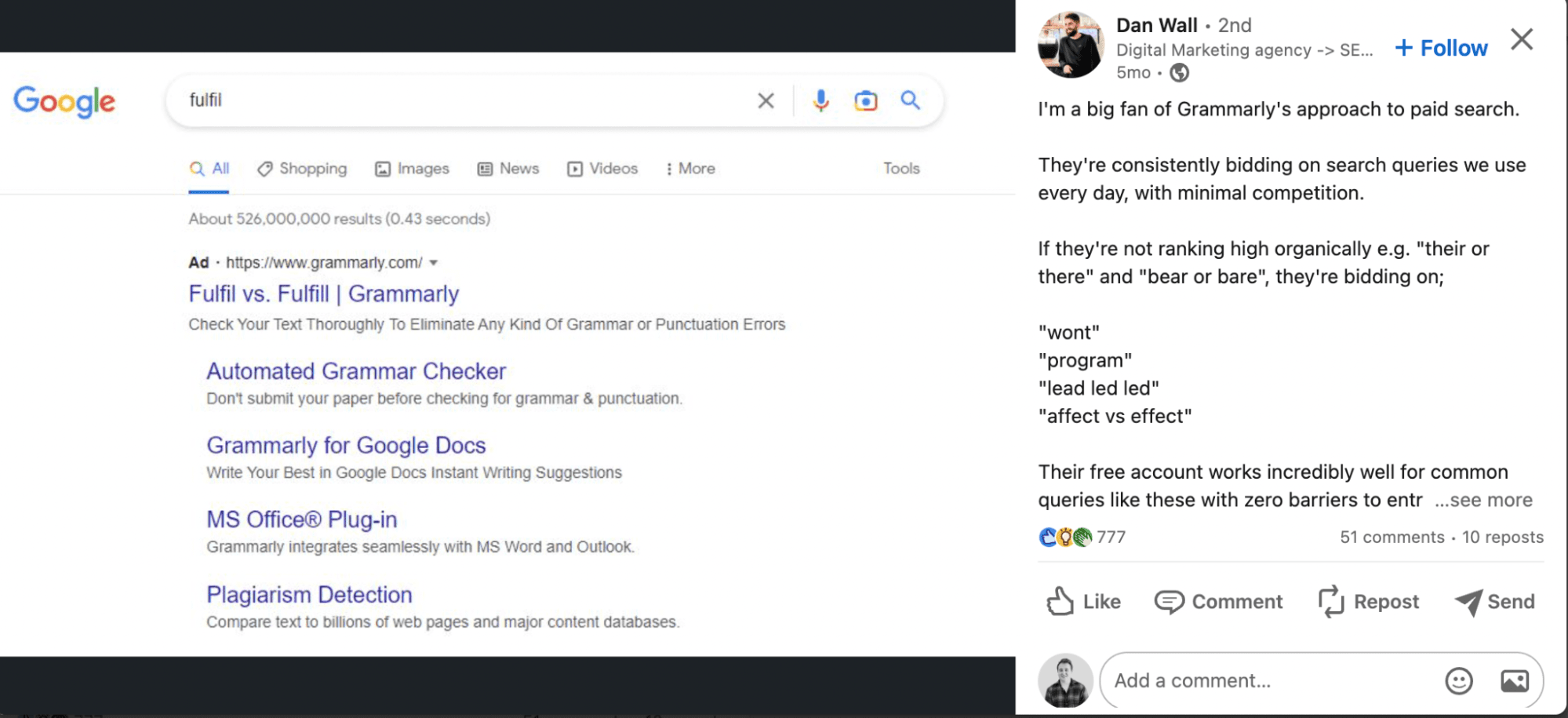
Kyle Poyar (Operating Partner at OpenView (via Dan Wall on LinkedIn)) provides one example of this when unpacking Grammarly's paid search strategy informed by their customers' common writing-related search queries.
Identify key metrics
You can't improve what you don't measure. Early on, product-led teams need to identify a set of core metrics to rally the entire organization around. And when the product is the primary vehicle for growth, there are a handful of common-denominator metrics your team can track.
Acquisition metrics
Acquisition metrics, like sales- or marketing-qualified leads (SQLs, MQLs), are crucial for any company to gauge the success of their awareness campaigns at the top of the funnel.
But instead of MQLs or SQLs, product-led teams often focus on PQLs: product-qualified leads. These leads represent users who've already experienced the value of your product via a free trial or freemium experience.
To define PQLs, you'll need to find the key actions in your product that trigger your customers' "aha" moment (a moment of insight or discovery).
Free trial conversion rate
Product-led strategies can involve a free trial component. This enables your users to test the product before purchasing. But free users don’t usually contribute to revenue, so tracking the number of conversions to paying customers is crucial for executing a PLG motion.
Time to value
PLG only works when you make it easy for users to experience the value of your product. And time to value measures the time it takes for new users to experience that value. Ideally, your product is set up to allow new users to envision future success and fast. If too many are dropping out before activating, this is a sign it's time to dive into your product onboarding and remove unnecessary friction from the experience.
North star metric
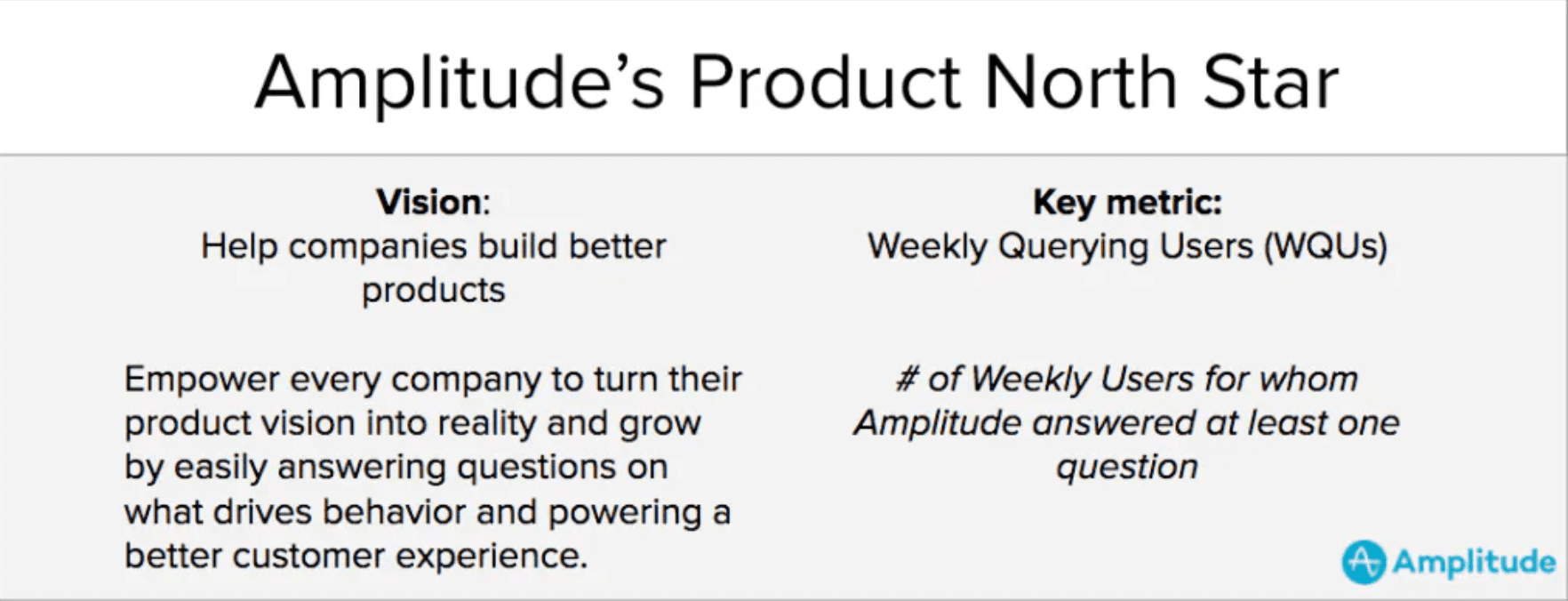
No metric is more crucial than your north star metric. Your north star metric encapsulates the meeting point between your overall product vision and a key measure of your product strategy. It should also closely mirror the actions that signify value to your customers. Below is a simplified example of Amplitude's north star metric.
Conduct audience analysis
Conducting an audience analysis helps you unravel the shared attributes, behaviors, interests, and demographic or firmographic data behind the folks using your product.
Some of the key steps to audience analysis include:
- Market research - This includes customer surveys, interviews, and competitive analysis.
- Segmentation - Once you define the shared traits behind your best customers, you can segment your user base to focus on the groups that share these characteristics.
- Data sampling - With your ideal customer and audience defined, you can use analytics tools to surface data-driven insights from the actions these groups take with your product.
Prepare your product
If you're considering PLG, there are a few core product attributes needed to build before you can get started.
Free trial or freemium offering
A free trial version of a product offers users the chance to explore a full range of features before making a purchasing decision on a trial basis. A freemium version of a product usually restricts some features or usage limits in exchange for being a free user. Both of these approaches come with challenges.
Self-service onboarding
Another key component of any product-led company is a self-service motion. You can design the best free trial out there, but only products that let you sign up and onboard yourself without speaking to sales can unlock the true potential of a PLG strategy. To prepare for PLG, ensure your product onboarding is free of unnecessary friction and allows users to experience value quickly.
Product analytics
Data is the lifeblood of a successful PLG motion. Without data, you're informing your entire funnel and product strategy on hunches and anecdotes—instead of what your customers' actions suggest they need.
That's why product analytics is a must-have for PLG to work. You can use product analytics to assess everything, from funnel efficiency and retention to product engagement and shared cohort characteristics.
To bring your product up to speed, you may need to dedicate significant engineering hours to configure things like in-product event tracking properly. You can also use a tool like Amplitude to collect data much faster.
Components of a PLG strategy
As you build your PLG motion, here are some key components to hit.
Onboarding and retention
Sales calls and product demos can add unnecessary friction when users already understand your product's value.
Product-led onboarding entails using your product as the primary driver of customer onboarding. Your product needs guardrails to guide users toward the value they want. This also increases retention by delivering value quickly and encouraging users to return.
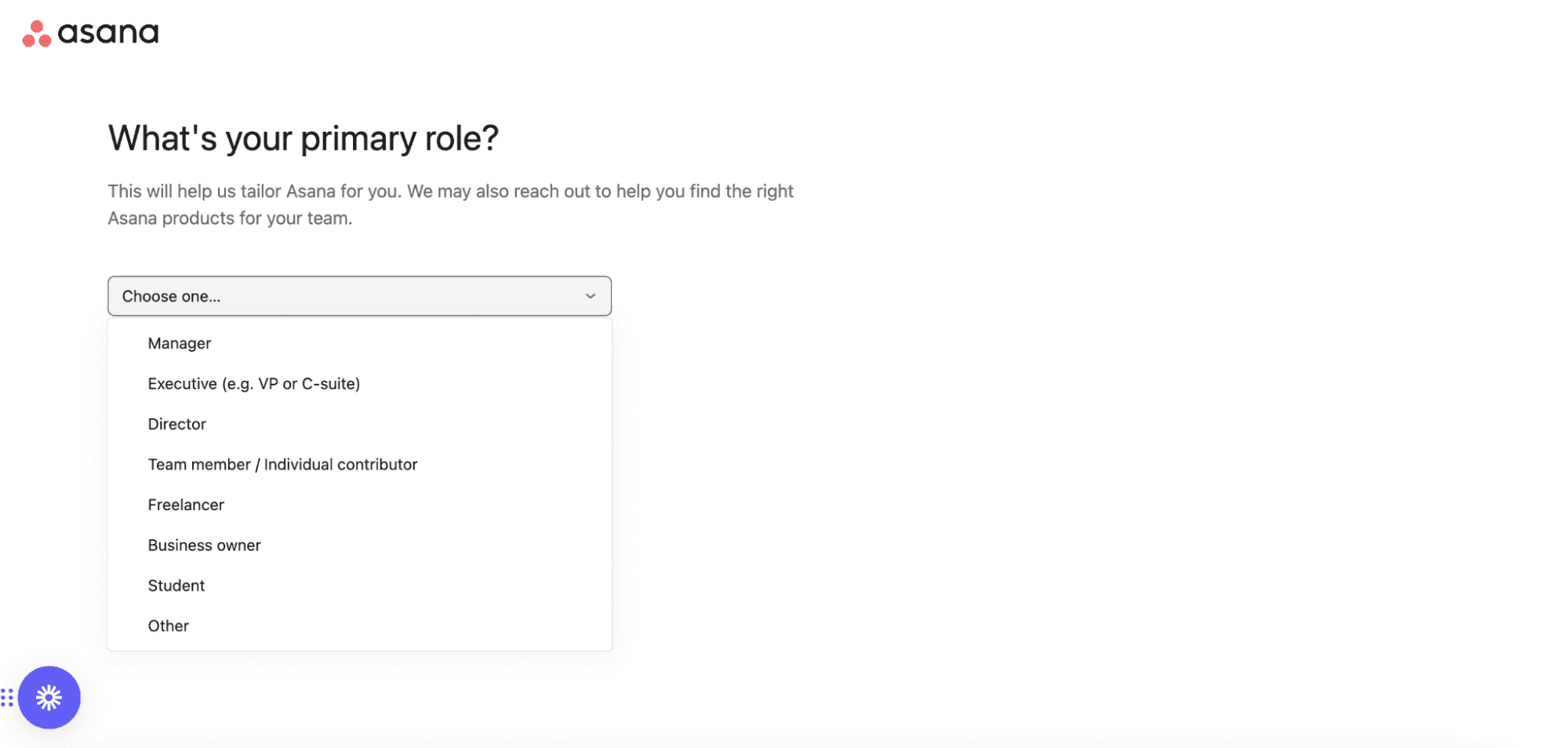
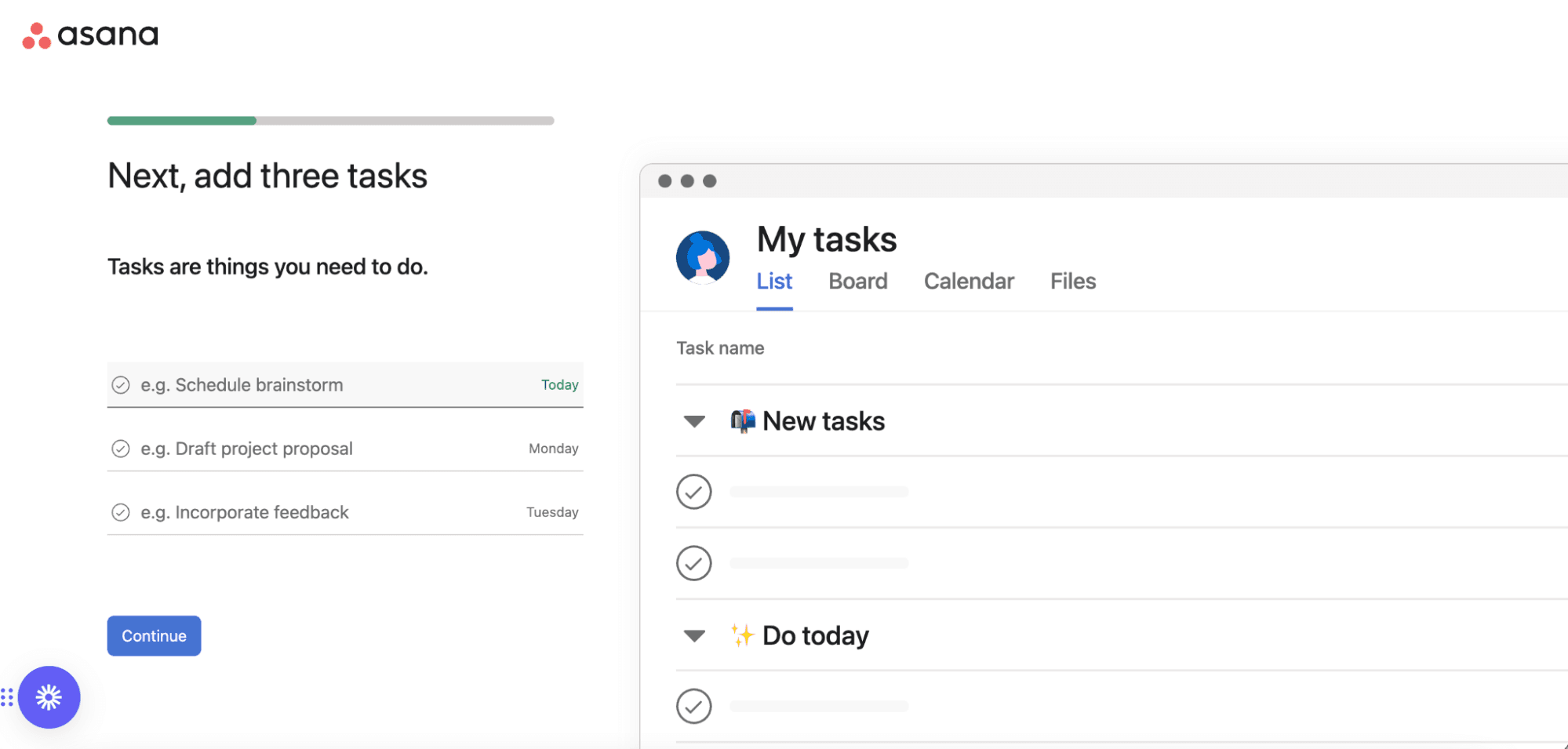
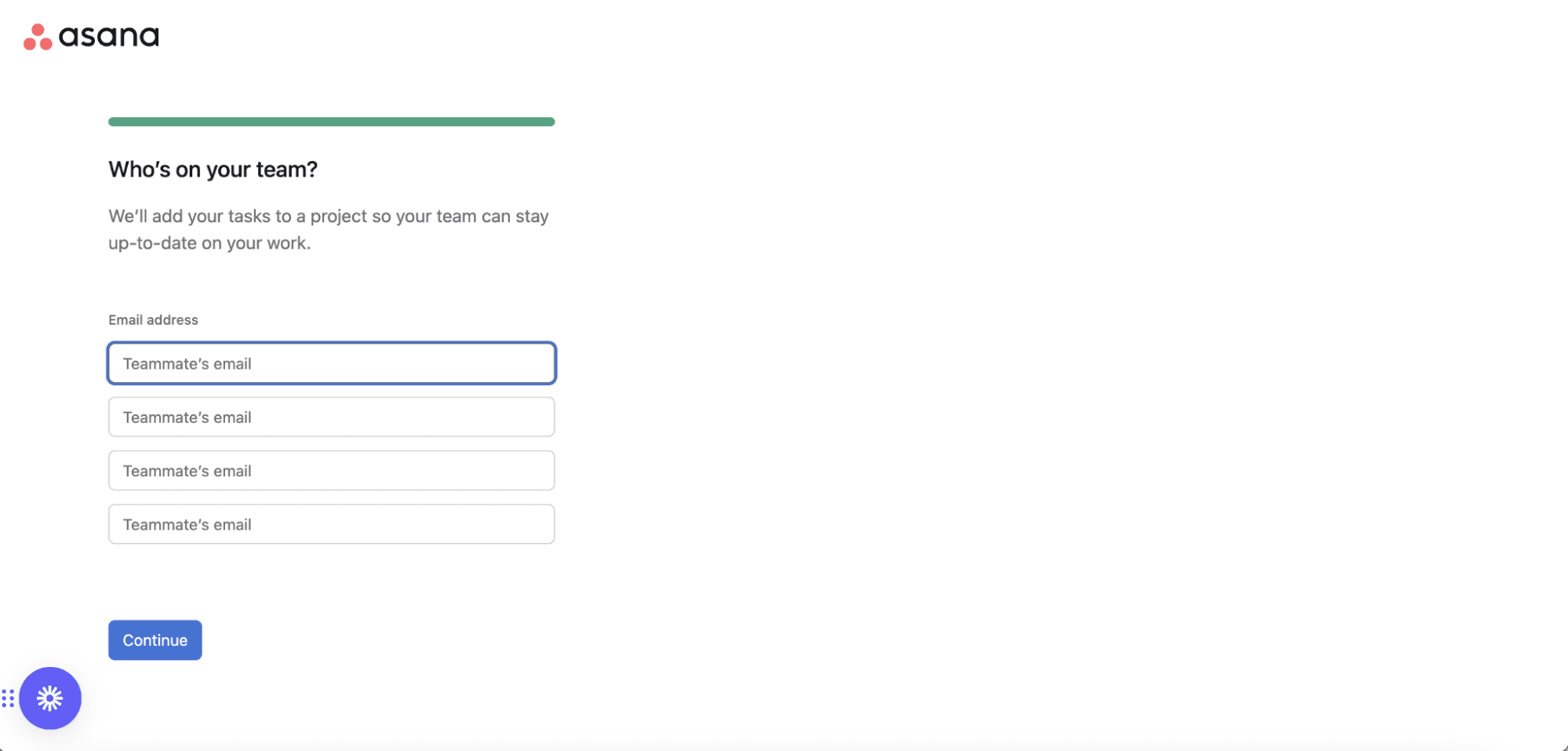
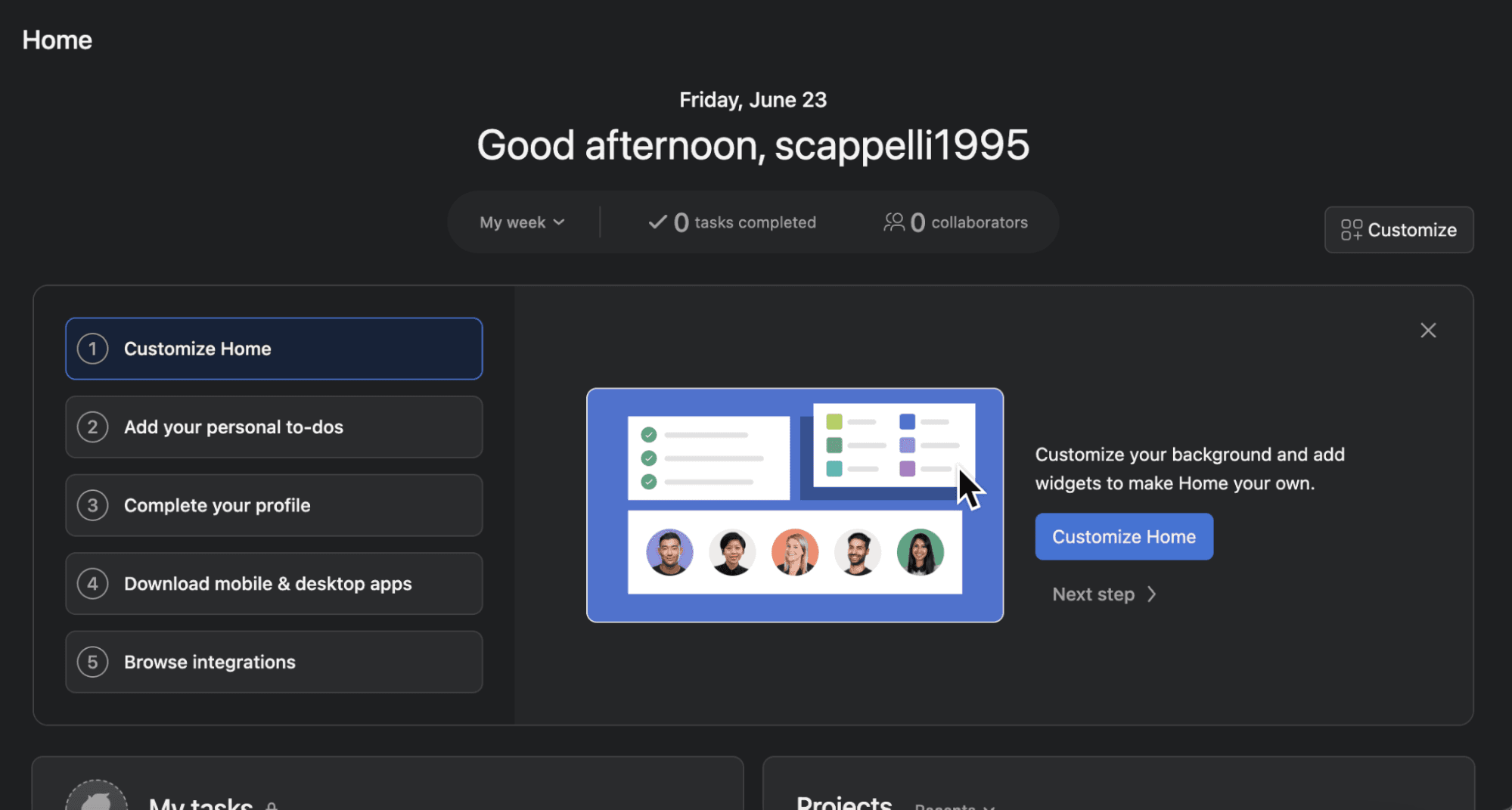
Asana's onboarding flow for new accounts is a masterclass in onboarding for PLG.
The productivity management tool starts by personalizing a bespoke product experience, depending on your company role.
Later, it encourages users to get a running start with the product by adding three tasks to a project.
It also facilitates the possibility of viral growth by prompting you to add teammates to your first project.
Finally, after the initial onboarding flow, it only drops you into the product with context. It takes you to a main dashboard featuring a checklist of additional actions, increasing the chance of reaching your "aha" moment.
Freemium or free trial
One trade-off is whether to use a free trial or a freemium model. Free trials, for example, allow you to create a sense of urgency with an expiration date. They also let you tease a more robust feature set.
The freemium model gives users a longer runway to experience the value of your product. You can also use freemium to support additional revenue streams (e.g., by running ads). But you also risk disincentivizing conversion by giving away too much value.
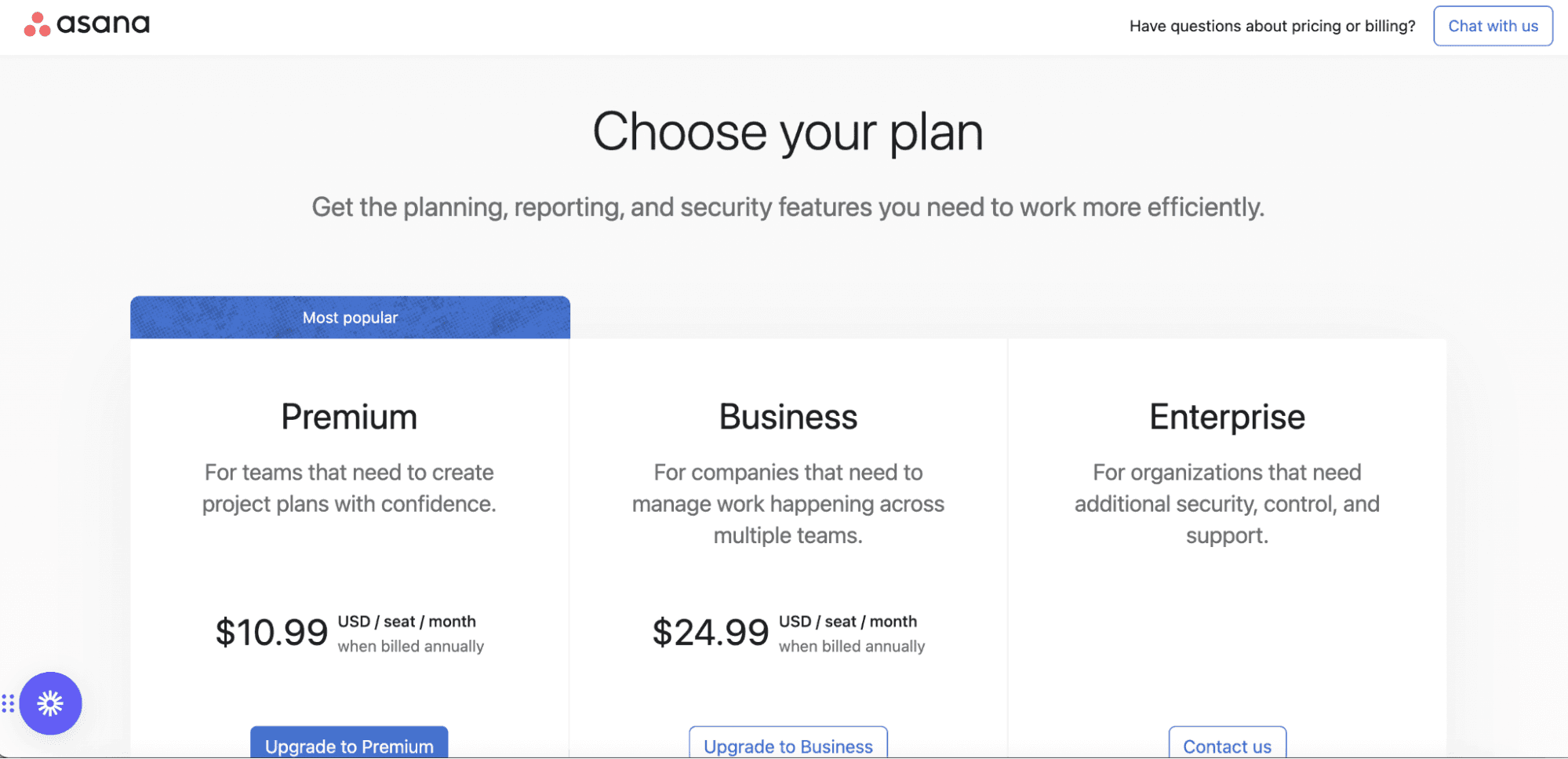
The right choice largely depends on your product and category. In either case, you'll need to adopt one of these models to be fully product-led. Asana, for example, follows a freemium model that incentivizes users to sign up for a paid plan to take advantage of more advanced features.
Referral programs
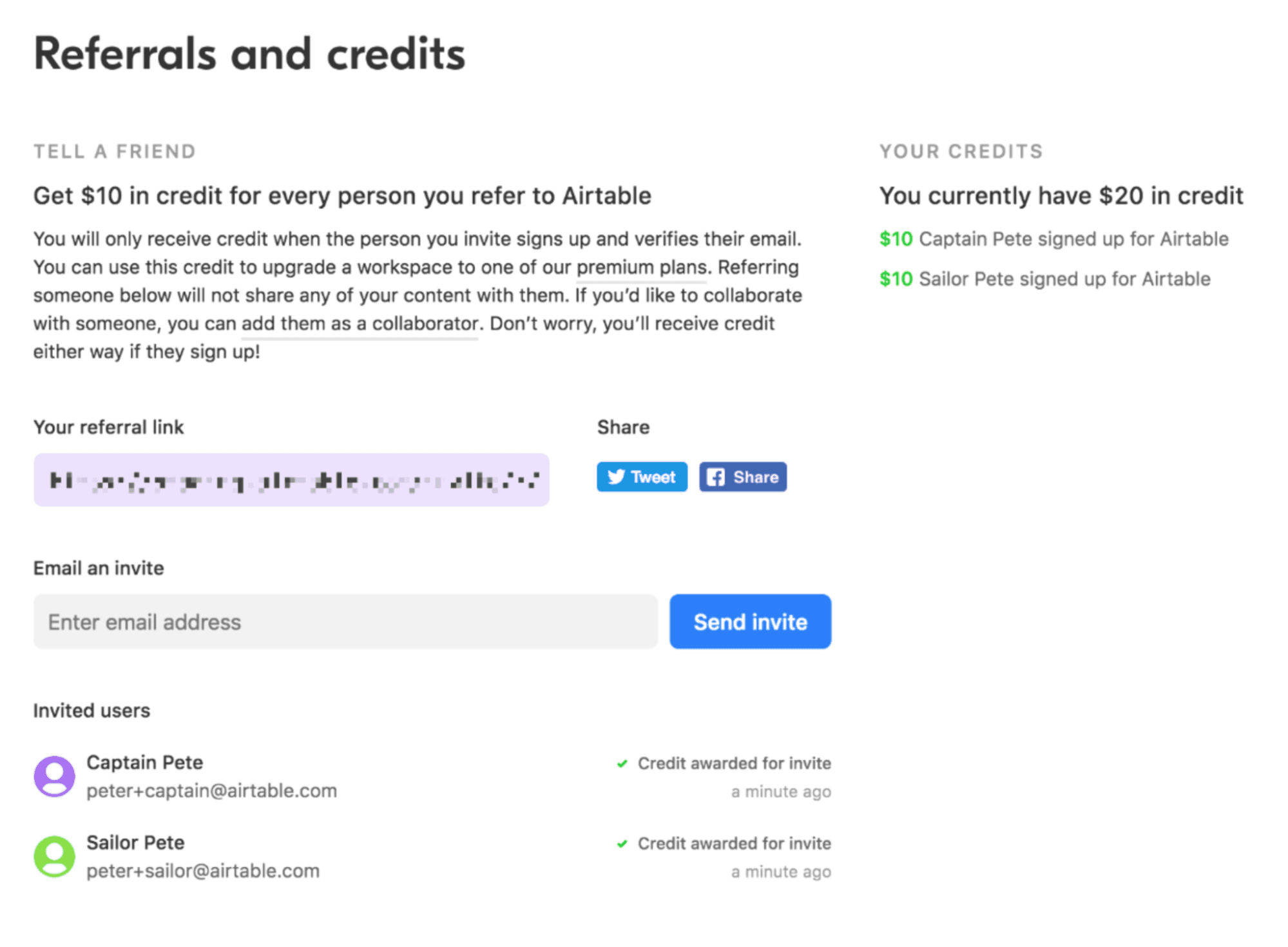
A referral program is a great way to add value for existing users while building a viral growth loop to acquire new ones.
Airtable's referral program functions as a credit system that uses a unique code to pay users $10 in Airtable credits for every user they refer.
Data and analytics
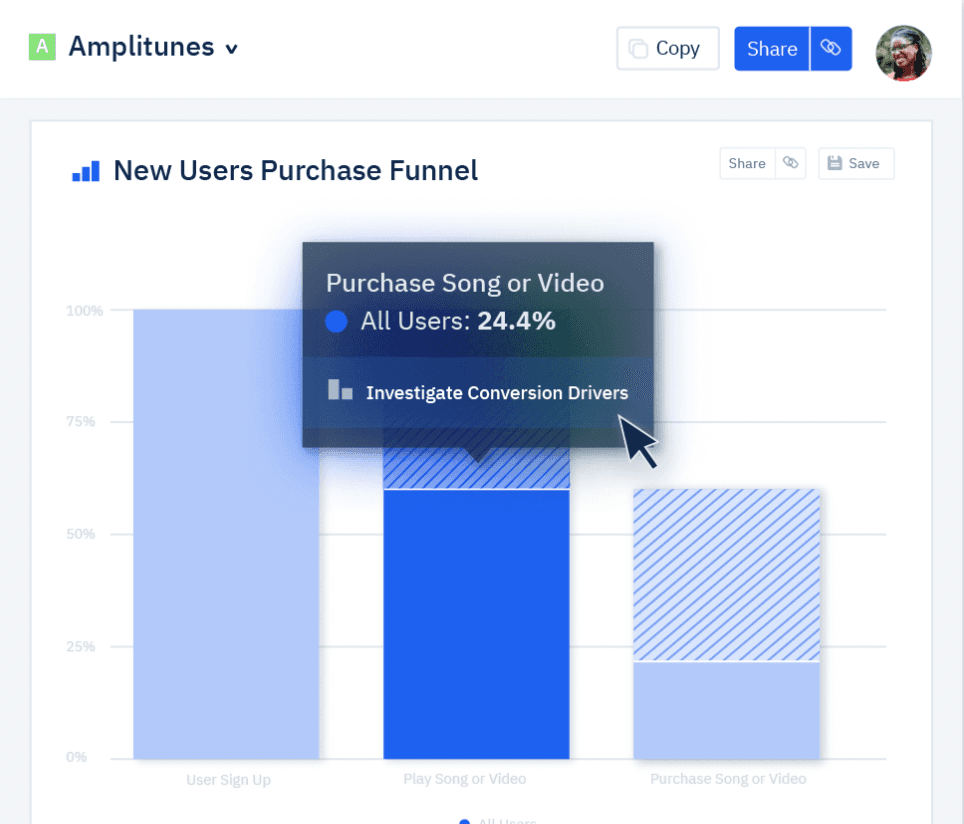
Data is the bedrock of PLG. Merging product analytics data with customer data from third-party marketing tools can help you set up an automated system of touches that adapts as your customers travel through the funnel.
For example, Amplitude's Funnel Analysis tool can help you identify the stages of a drop-off in your product, which can help you create stickier experiences that help users find value faster.
Challenges in PLG campaigns
PLG isn't without challenges, however. Some of the biggest include:
- Building a scalable system - Aligning the GTM and product organizations is a common stumbling block. Ideally, product and GTM teams can work together to form a single source of truth for the data that matters most and share a common view of essential actions in the product for activation.
- Balancing revenue and profit - Though a product-led strategy can decrease customer acquisition costs, there are still significant investments to be made on the R&D side of the organization—which can come at the expense of profit.
- Managing customer relationships - Ideal customers for PLG companies tend to be solo adventurers. They don't want the hand-holding experience of the product demo—they want to dive in and get value from the product themselves. However, this can make life difficult for customer success managers driving expansion revenue with account-based touches.
Seizing the PLG moment
The PLG moment has arrived in software—your product's end users are now the same ones who are converting.
PLG poses a massive blue-sky opportunity for growth. Though implementing your PLG launch can be daunting, focusing on mapping your users' subjective and objective experiences of value throughout the customer journey is the best way to gain alignment across the product and GTM organizations.
Are you interested in PLG and want to learn more about what it encompasses or how to get started? We put together a comprehensive guide to help you and your team apply today’s best practices. Get your copy today.

Julia Sholtz
Former Group Product Marketing Manager, Amplitude
Julia is a former product marketer at Amplitude. She focuses on go-to-market solutions for enterprise customers.
More from Julia


